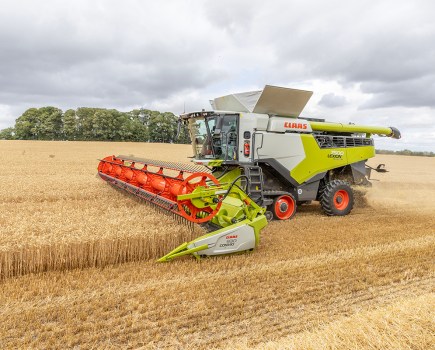

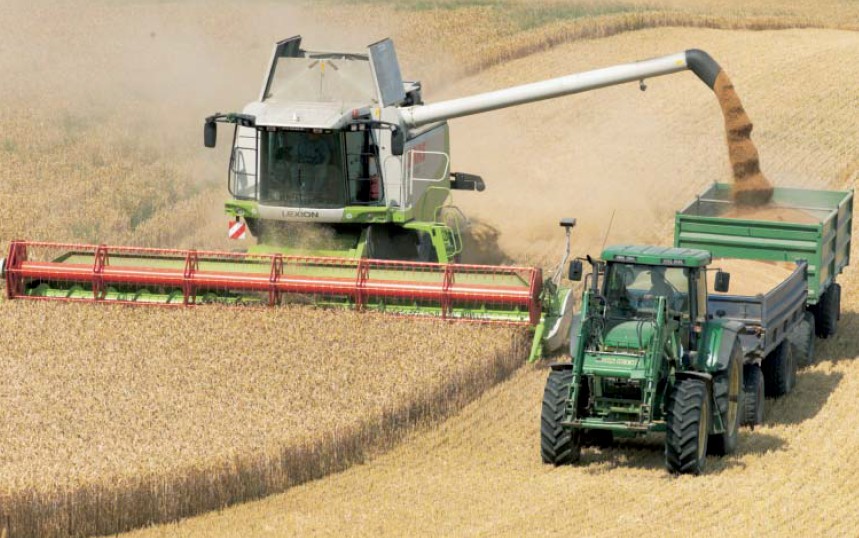
Driving impression: With the Lexion heading into its ninth year, many had argued that it was time for Claas to give its combine family a bit of a tweak. Which is precisely what the harvester manufacturer has now done. The important question: Has it done enough? We take an exclusive drive on the Claas Lexion 500
No, the 500 isn’t revolutionary. Not radical – as in totally different to what came out before. There are, after all, no major changes to the Lexion line threshing system. Any significant tweaks elsewhere? Yes. And, in our view, there’s certainly enough to justify tagging the 500 as a ‘new’ combine range.
The complete Claas Lexion 500 line comprises nine units, arguably the most notable changes, over the old 400, being to the grain tanks and motors. These are both now bigger, with the engines getting the extra benefit of electronic control (see table). On the rotary-spec models, for example, the engines supply a second power curve, when rpm drop by 100, to provide reserve power.
Bear in mind when assessing the adjacent power table that Claas quotes EWG 80/1296 (claimed to correspond to the ISO standard) in its literature, whereas we list the ECE R 24 figures. As an example of how the power has changed, rated engine hp on the 480 models was 303kW/412hp, and this now goes up to 316kW/430hp on the 580. On top of that, the second power curve has the capability to take the 580 up to 353kW/480hp, whereas max power on the 480 was 317kW/431hp. That is a significant 50-horse hike.
For more up-to-date farming news click here and subscribe now to profi and save